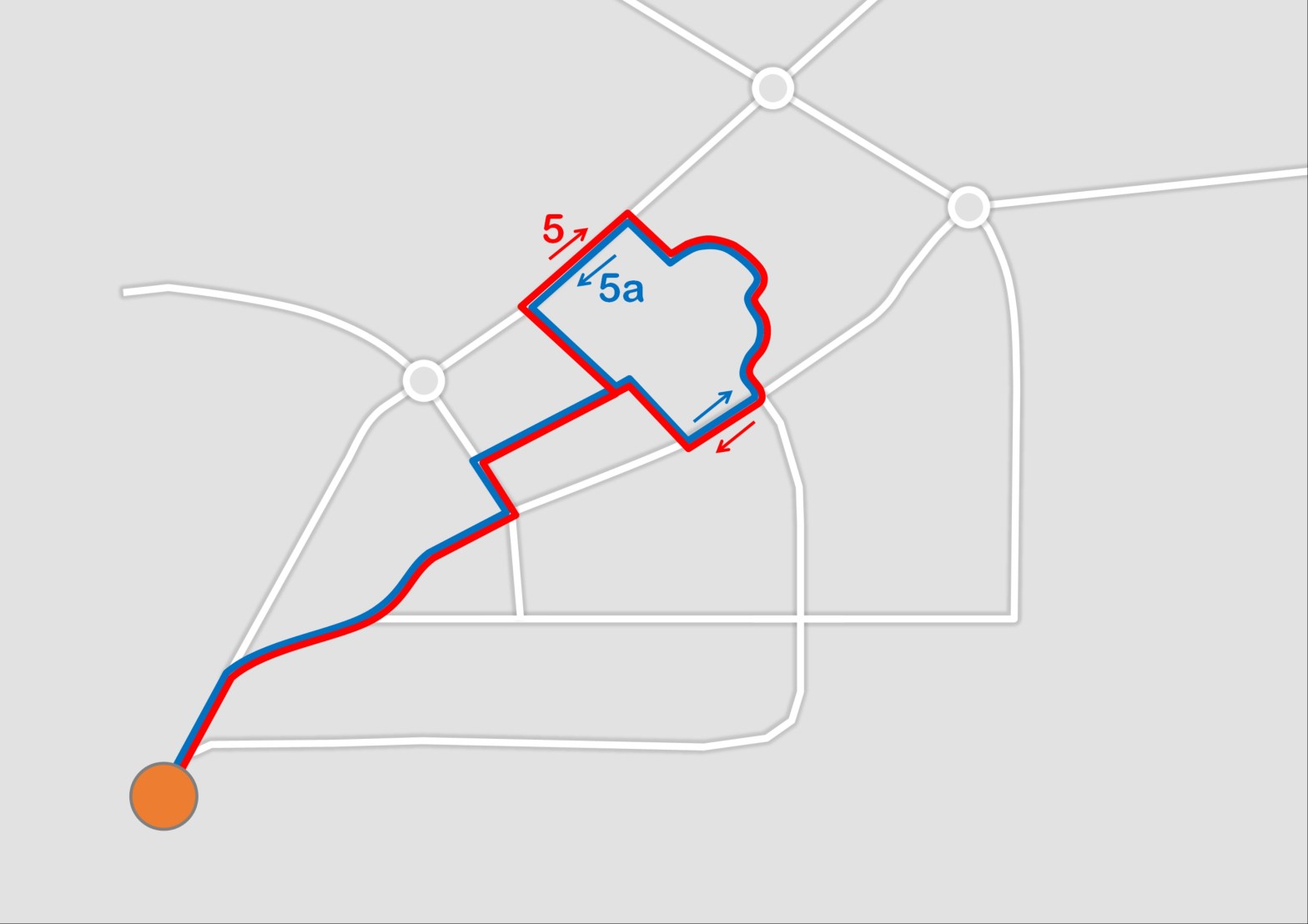
In my last post (see here), I spoke about some of the lessons I personally learnt from the changing of a single route. In this post, I will discuss the next lesson this route can teach us; it is sometimes necessary to break from the norm to achieve a goal.
As we discussed last time, during most of the day the new service 5a operates nicely with the 3 vehicles on a 45mins round trip time. However, during the am and pm peaks the running time gets effected by traffic congestion along the route, a common problem in pretty much every town and city across the UK.
For this route we had 3 options open to us for dealing with the peak time issues, however each had their own pros & cons;
Option 1
We could extend the running time and change the headway from every 15mins to every 20mins and keep the same 3 vehicle resource requirements.
Pro; resource maintained therefore costs are managed.
Con; the headway suffers at potentially the busiest period
Option 2
We could extend the running time and keep the headway at every 15mins by adding in a 4th vehicle.
Pro; Headway maintained (or could potentially be improved?) during the busiest period.
Con; additional resource, and therefore costs, required.
Option 3
We could keep the headway at every 15mins and the 3 vehicle resource requirements by finding a way to reduce the running time in the peaks back down to 45mins for a round trip.
Pro; Headway and resource required maintained over the busiest period.
Con; to reduce the running time it may be necessary to change the route and perhaps miss stops as a result.
To decide which of the 3 options would work best for us we should remind ourselves of certain points raised earlier. Firstly, we knew that due to a recent fall in revenue, it was no longer deemed sustainable to use 4 vehicles on this service, which suggests that option 2 would not be suitable.
Also, offering a 20mins headway would equate to a reduction in service compared to the 15mins headway operating during the day. We should perhaps try to preserve that where possible over the peaks, suggesting that option 3 is the most favourable. However the impact of potentially missing some stops needs to be assessed if we do follow this path.
Looking at the route map at the top of this post, there is a section of route, known as ‘Central Drive’, which is where the service first deviates away from the main trunk roads and before the loop of the estate begins. By looking at passenger boarding data we could assess the impact that missing out this section would have, at certain times of day. Upon inspection, the data showed that customers overwhelmingly using these stops towards the City in the am and from the City in the pm.
With this knowledge we could confidently argue that by missing the Central Drive stops in one direction over the am & pm peaks, we wouldn’t be causing any significant disruption for our customers. All that remained was to test whether this would reduce the running time sufficiently to maintain the headway of 15mins across the 3 vehicles allocated to the route.
Fortunately, the position of the estate, between 2 major trunk roads, helped us no end. The greater road speeds, boosted by the fact buses were running against the main flow of traffic, meant that the time saved by missing Central Drive was enough to allow for additional runtime in the opposite direction. This meant that despite the traffic congestion at peak times, it was still possible to provide a 15mins headway and still only require the 3 vehicles to do so.
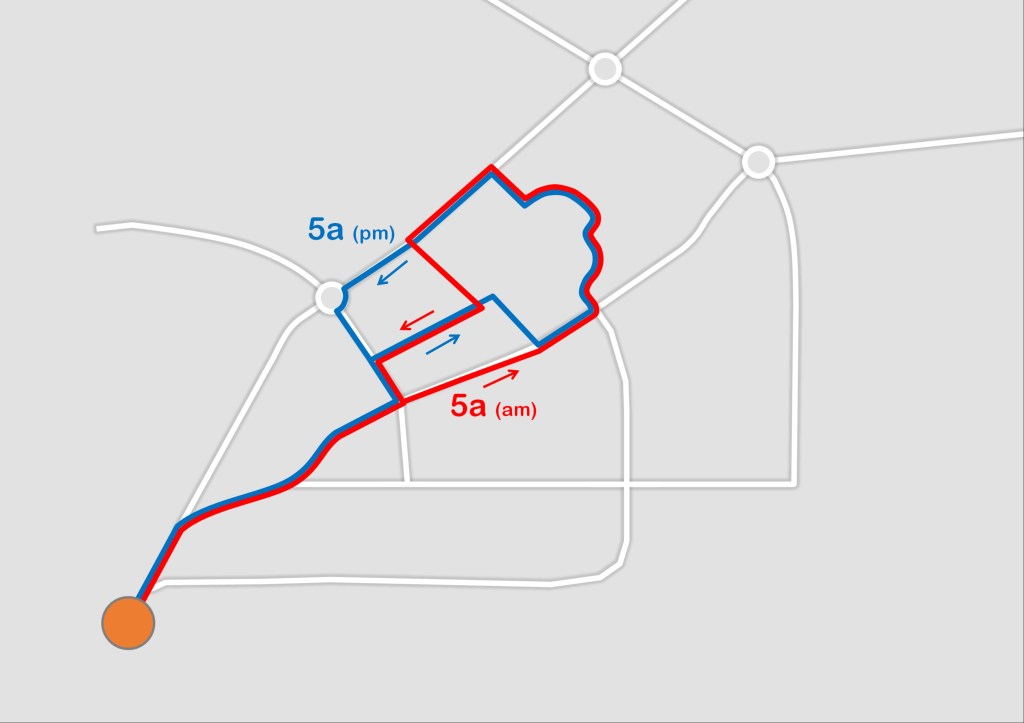
There are still more lessons that this route provided a young bus scheduler (me). As a result, I feel it is important to use this service as an example to help pass these lessons onto other new schedulers whenever I can.
Look out for more lessons like this one in the future.
 Kieran Proctor
One thought on “More Lessons Learnt; Same Simple Route”
Comments are closed.